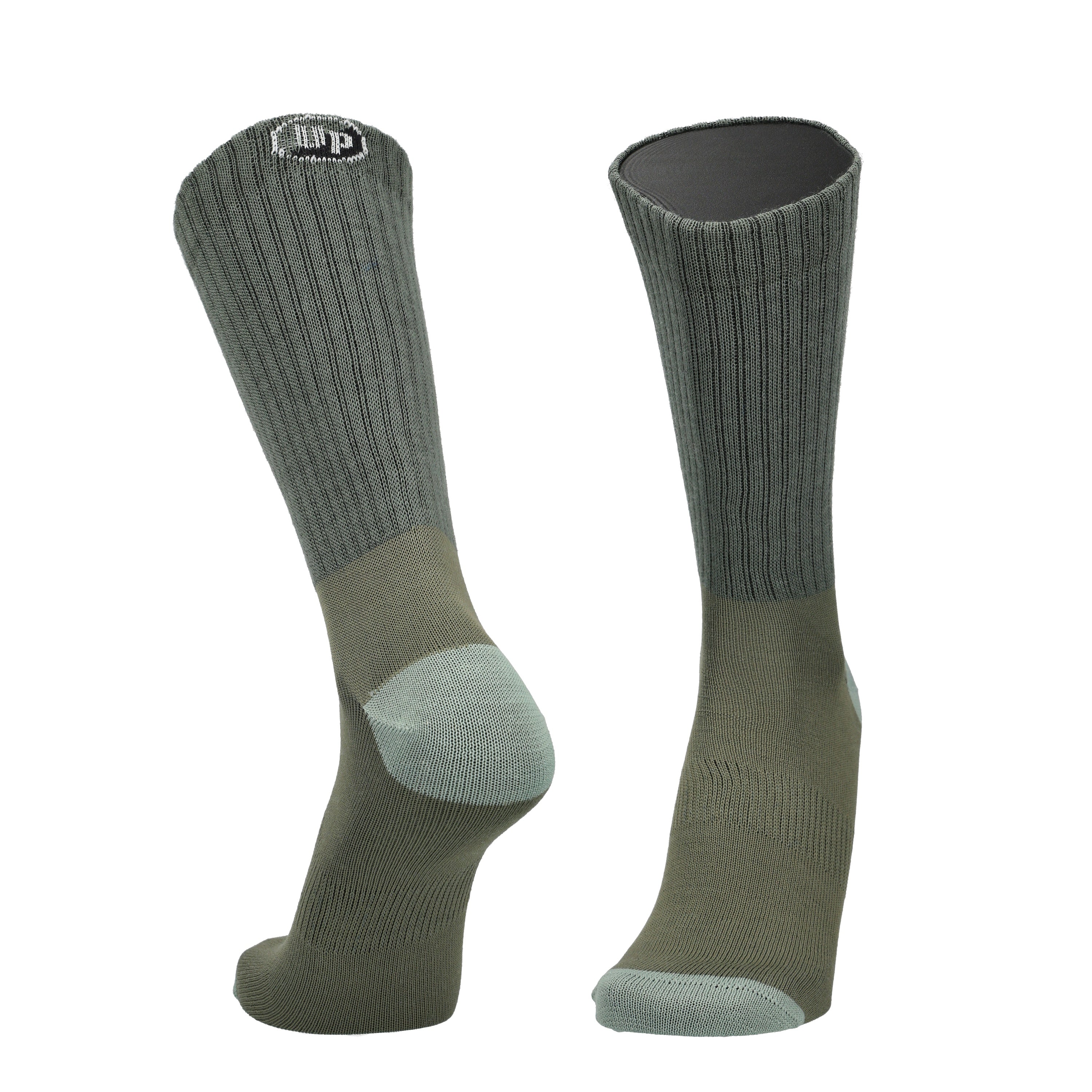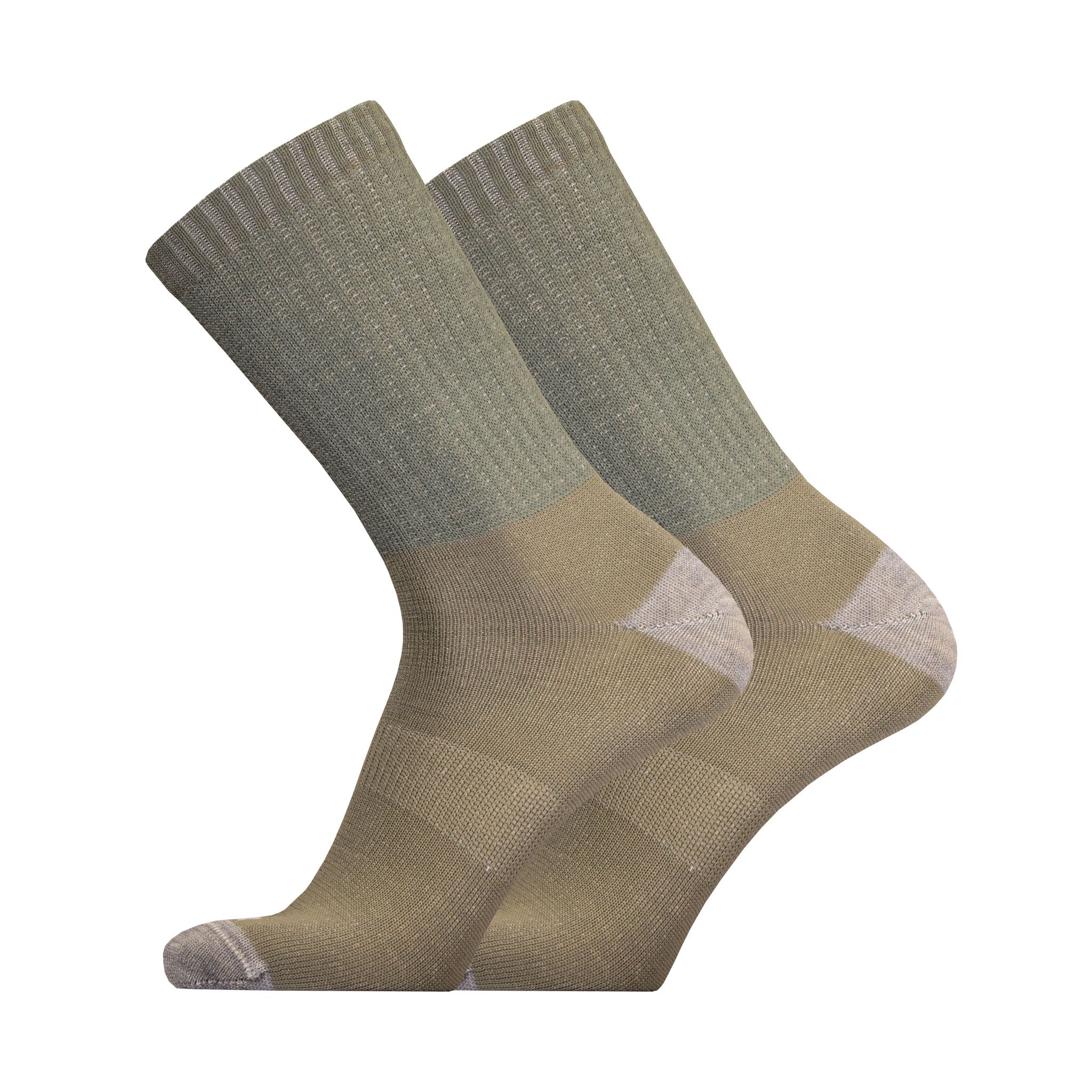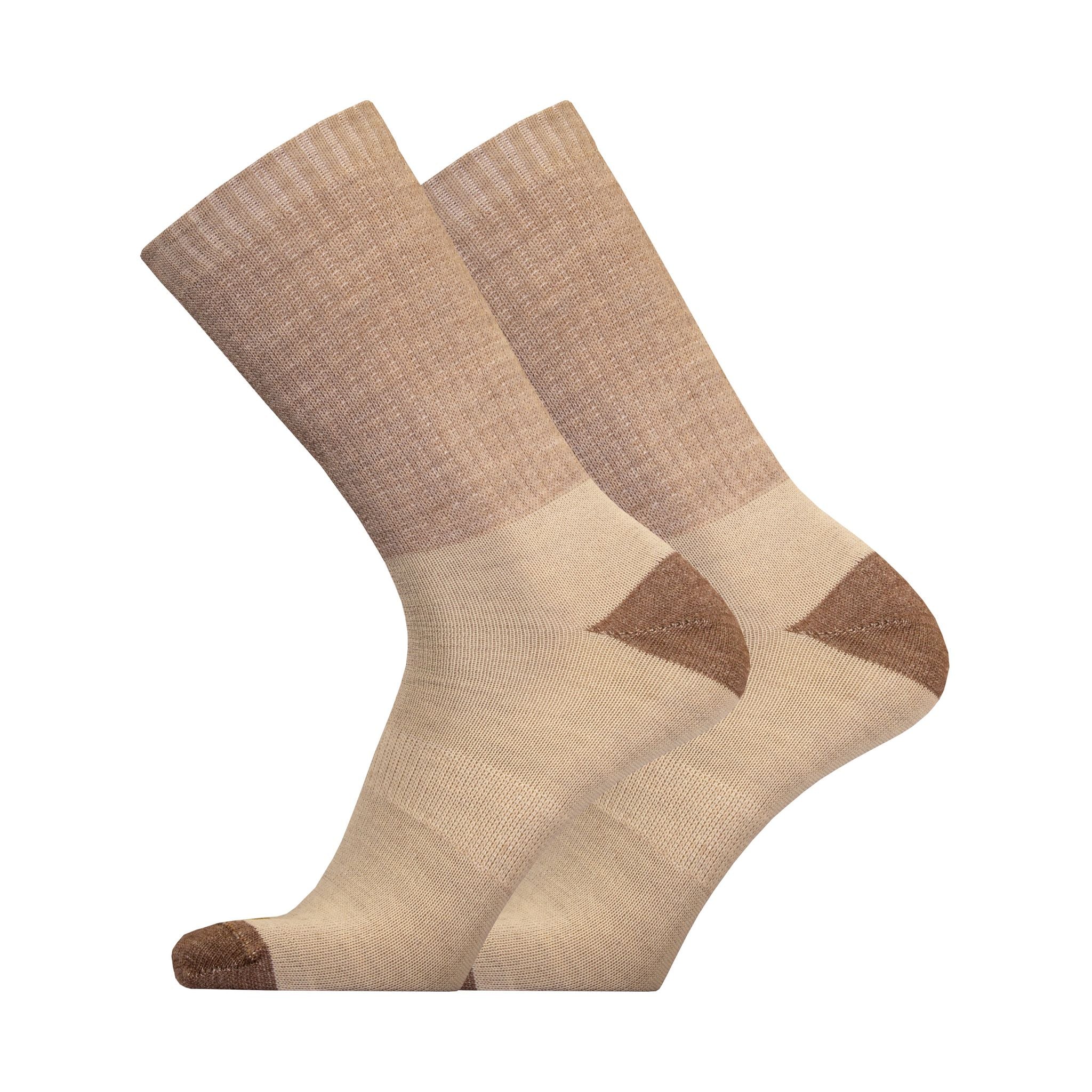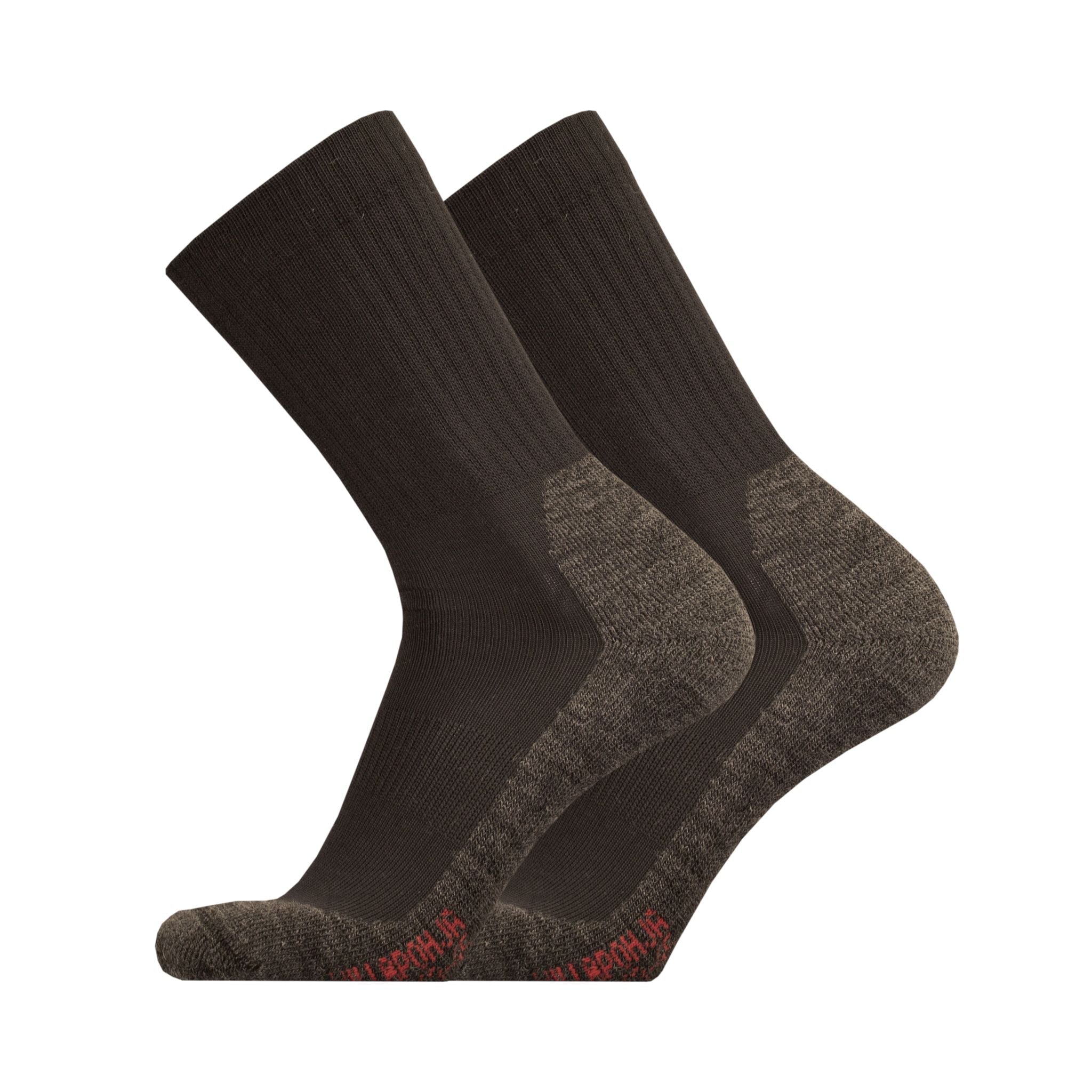
You have surely felt how the frost and cold creep into your feet and wondered why expensive shoes do not warm enough?
At this point, it is not just about the footwear. Even a good shoe can cause blisters, rubbing, and feel unpleasant and cold if the sock choice is not right. Socks play a surprisingly big role in how a shoe functions.
We Finns are used to wearing cotton socks, but in terms of properties cotton is a poorer choice for cold weather conditions, which we live in for a large part of the year. Perhaps sometimes a knitted wool sock is slipped on to accompany the cotton sock, and yet the toes still curl from the frost.
Why is cotton not the best choice for sock material? Because cotton absorbs a lot of moisture, does not warm at all, and dries slowly. For this reason, a cotton sock worn against the skin does not warm enough, and the cold gets in more easily; chafing and blisters are also more likely when a damp sock rubs inside footwear against clammy skin.
Merino wool sock is thought of as a material for frosty weather, but often only for winter sports or outdoor activities. The properties of merino wool are amazing, and it beats cotton regardless of the conditions, making it an excellent choice for everyday use as well.
Merino wool adapts to the skin’s temperature, warming in the cold or cooling the skin in hot weather. It is a breathable material that warms, wicks moisture away from the skin, and is naturally antibacterial. Merino wool is soft and does not itch, so it is also well suited for users with sensitive skin.
The functionality of footwear often depends on the sock. But how do you choose the right sock for the right footwear and need?
We have made this choice easier by adding thickness and thermal value icons to the products.
The thickness icon describes the product’s physical thickness. You can also think of it through the footwear: the lighter the shoe, the lighter the sock. The heavier the shoe, the thicker the sock / combination of socks.
The warmth value similarly describes the amount of merino wool in the product. Products that contain no merino wool at all have a warmth value of 1, and those socks that contain over 60% merino wool are products with a warmth value of 5.
As footwear: a technical winter boot with a membrane:
Various moisture-protecting membranes are common in winter boots and footwear intended for winter sports. These shoes are usually fairly snug-fitting, so the sock cannot be too thick, in order to leave room for the toes to move and enough air space. Typically, the shoe has a slightly thicker sole, is unlined or has a thin lining, and includes a technical membrane to prevent moisture from entering the shoe. In this case, the sock should be relatively thin, but warm.
We recommend Light- or medium-thickness products for these shoes. The warmth value should be at least products with a value of 3.